
There's a dangerous and lazy narrative about AI's impact on marketing: that it's an efficiency tool, a way to do more with less, cut costs, and automate grunt work. That's not just a half-truth; it's the worst form of strategic myopia an agency can have.
At SXSW 2026, Kipp Bodnar, HubSpot's CMO, gave us the perfect metaphor: AI in marketing isn't the Industrial Revolution, it's the Renaissance.
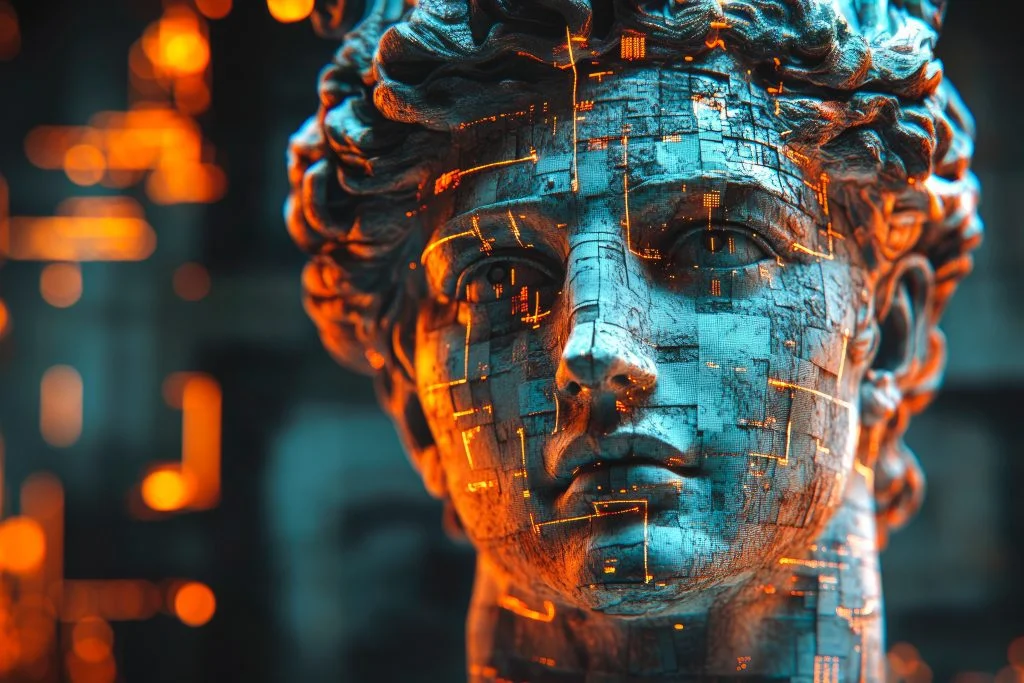
The Industrial Revolution was about scale and commoditization. Doing things faster, cheaper, more standardized. The Renaissance was about giving artists and engineers new tools (like perspective in painting) that allowed them to create things that were, until then, impossible.
If you're using AI just to write content faster or to cut your creative team's costs, you're thinking like a 19th-century factory manager. And you're about to be run over by whoever is thinking like Leonardo da Vinci.
In this article from On, we'll explore the concept of Renaissance Marketing, how it redefines the relationship between cost and quality, and why the real opportunity isn't to save money, but rather to reinvest efficiency into creativity and relevance at a scale never seen before.
The Case That Defines Everything: $200k vs. $2k
Let's leave theory behind and get practical. One of the most striking examples from SXSW was a video campaign:
- Traditional Model: 3 months of production, cost of $200,000.
- AI Model: 10 days of production, cost of $2,000, with 85% of the performance of the original campaign.
The primary reaction of any CFO or mediocre marketing manager would be: "Great! Let's save $198,000 and pocket the difference!" And that's exactly where they lose the game.
"Don't save. Spend the same, but make 500 films instead of 1." – Kipp Bodnar, CMO of HubSpot
The Renaissance mindset is: what can I do with that $198,000 in efficiency that was impossible before? The answer isn't to make one cheaper film. It's to make 500 hyper-personalized films, one for each customer segment, one for each stage of the journey, one for each sales objection.
It's using AI's scale not to commoditize the message, but to make it radically personal.

The End of the Average: Mass Personalization Is the New Standard
Mass marketing is dead. Segment marketing is dying. We're entering the era of individualized marketing at scale. AI allows a brand to have a 1-to-1 conversation with millions of customers at the same time.
This shows up in several ways:
- Personalized Videos: Palo Alto Networks hired Keanu Reeves for its main campaign. Instead of stopping there, they used AI to create 5 secondary characters who continued the narrative in hundreds of short videos, each targeting a specific pain point of a customer niche.
- Dynamic Websites: A real estate company cited at SXSW uses AI to create a unique microsite for each qualified buyer, with information, photos, and even financial projections relevant only to that individual. The engagement? Absurdly higher.
- Emails That Converse: Forget templates with {{first_name}}. AI can now draft entirely new emails for each lead, using CRM context, browsing history, and even transcripts of previous calls to create a message that feels like it was written by a human who genuinely cares.
The "Heat Check": The Human Ability to Say "No" to Optimization
Renaissance Marketing isn't a blind apology for technology. On the contrary, it demands even greater human discernment. The most important skill for the marketer of the future may be the “Heat Check”: knowing when to say “no” to optimization and prioritize human connection.
Alistair Herkis, founder of the creative agency Student Studios, told a perfect story at SXSW. He used ChatGPT to help him buy fishing gear to go with his kids. The AI was great at comparing rods and hooks. But then, it asked: "Would you like to learn the most efficient way to tie the hook knot?".
His answer was a loud and necessary: "Enough! Go away."
He realized the goal of that moment wasn't efficiency. It was connection. It was the ritual of teaching his kids, of getting it wrong together, of creating a memory. Optimization would have destroyed the real purpose of the experience.
"Only drug dealers and tech companies call their customers 'users'." – Dr. Natalia Cosmina, MIT Media Lab
That line reminds us that behind every lead and every conversion, there's a human being. AI can optimize the path, but it can't replace the destination, which is almost always an emotional connection.
Practical Playbook: Implementing Renaissance Marketing at Your Company
- Map Touchpoints: Identify every point in the customer journey where a personalized message could have a disproportionate impact (welcome emails, cart recovery, post-sale follow-up, etc.).
- Reallocate Media Budget: Instead of spreading your budget across more channels, focus on creating creative variations for the channels that already work. Test 10 different videos instead of 10 different channels.
- Create an AI “Playground”: Establish a safe environment for the team to experiment with generative AI tools. The goal isn't immediate efficiency, but discovering new creative possibilities.
- Train the “Heat Check”: Incorporate the question “What is the human purpose of this interaction?” into every planning meeting. Celebrate decisions not to optimize when connection matters more.
- Sell Possibility, Not Efficiency: Change the conversation with clients. Instead of promising “we'll reduce your CPA,” promise “we'll create an experience so relevant your LTV will explode.”
The Future Is Handcrafted, at Scale
Renaissance Marketing is the synthesis of two seemingly opposite worlds: the impersonal scale of the machine and the artisanal touch of the human. AI frees us from repetitive work so we can focus on what really matters: strategy, creativity, and empathy.
Today, the role of a strategic agency is no longer just to produce ads, but to build creativity systems at scale that work for your brand. Therefore, companies that understand this shift don't just survive the digital noise, they define, together with us, the next era of the market.
Here at On, we turn the provocations from SXSW 2026 into practical methodologies that generate real growth and authority for your business.
So, if you want to understand how to apply Renaissance Marketing at your company and swap "making it cheaper" for "making the impossible," talk to us and keep following our blog to lead the market's next moves.
Also read: Synthetic Customers: How AI Is Making Market Research Obsolete (and Smarter)
