
AEO, GEO, AIO, Zero-Click: what is all this, and how is it already affecting your business?
If you follow your company's analytics reports, you've probably already noticed a persistent statistical anomaly over the last few quarters: organic traffic is dropping, even as publishing volume stays steady or increases. This isn't an isolated algorithmic penalty, a technical glitch in your CMS, or an issue with your content team. It's a structural and irreversible shift in how the internet distributes information.
During our deep dive at SXSW 2026, in Austin, Texas, the team at On Marketing Digital immersed itself in technical discussions about the future of search. We attended panels on AEO, AI Search Measurement, and the collapse of the traditional funnel. The consensus among search engineers, product strategists, and CMOs of major brands was unanimous: the era of measuring success by top-of-funnel click volume is over. Generative AI has turned search engines into answer engines.
With all that in mind, in this article we want to take a deep dive into the so-called “Zero-Click Economy,” present the latest data on its real impact on traffic, explain the technical evolution of SEO toward AEO and GEO, analyze how different sectors of the economy are being affected, and finally, detail what a digital marketing agency needs to do today to ensure its clients' visibility tomorrow.
What is zero-click in search?
Broadly speaking, we're talking about an information search in which the user finds what they're looking for without needing to click a link on the search engine results page (SERP). But the term can also refer to other forms of search that don't lead to a SERP at all, such as voice search and searches performed within social media apps, shopping apps, or tools like Google Maps.
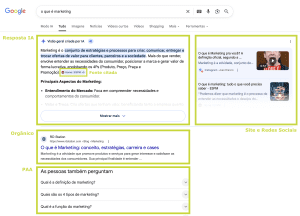
According to data compiled by Forbes and Semrush, around 60% to 65% of current Google searches end without the user clicking on any organic link[1] [2]. The answer is consumed directly on the SERP, whether through an AI Overview, a boosted Featured Snippet, or an AI-generated response.
To put the impact into perspective, consider the following data from independent studies:
| Metric | Measured Impact | Source and Sample |
|---|---|---|
| CTR drop in position #1 | -34.5% | Semrush / Ahrefs (10M keywords) |
| Average CTR drop (all positions) | -15.49% | Amsive Digital (700K keywords) |
| CTR drop when Featured Snippet + AI Overview coexist | -37.04% | Amsive Digital |
| Relative click decline (controlled study) | -46.7% | Pew Research Center (68K queries) |
| Percentage of Zero-Click searches | 60-65% | Forbes / Semrush (2026) |
| Traffic loss on affected sites | -20% to -40% | Stackmatix (2026) |
Gartner was even more emphatic in its macro forecast: traditional search volume will drop 25% by the end of 2026, potentially leading to a cumulative decline of 50% in organic traffic by 2028[3]. We're not talking about a seasonal fluctuation. We're talking about a permanent reconfiguration of the search ecosystem.
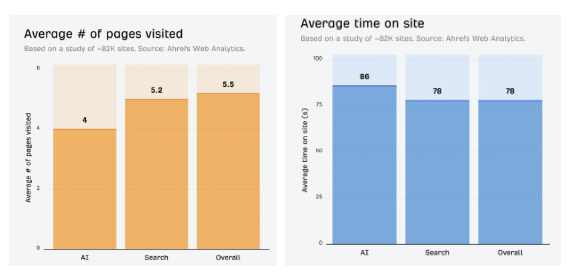
The Counterpoint: Less Traffic, More Conversion
However, there's one piece of data that completely changes the narrative for those who know how to adapt. According to Semrush, visitors coming from AI-driven searches convert at a rate 4.4 times higher than traditional organic traffic [4]. This happens because a user who lands on your site after being “recommended” by an AI has already gone through a qualification filter: the AI has already read, compared, and validated the information before suggesting the click.
“The funnel got narrower at the top, but far more efficient at the bottom. The question is no longer how to attract more visitors, but rather: how do we ensure AI recommends our brand.”
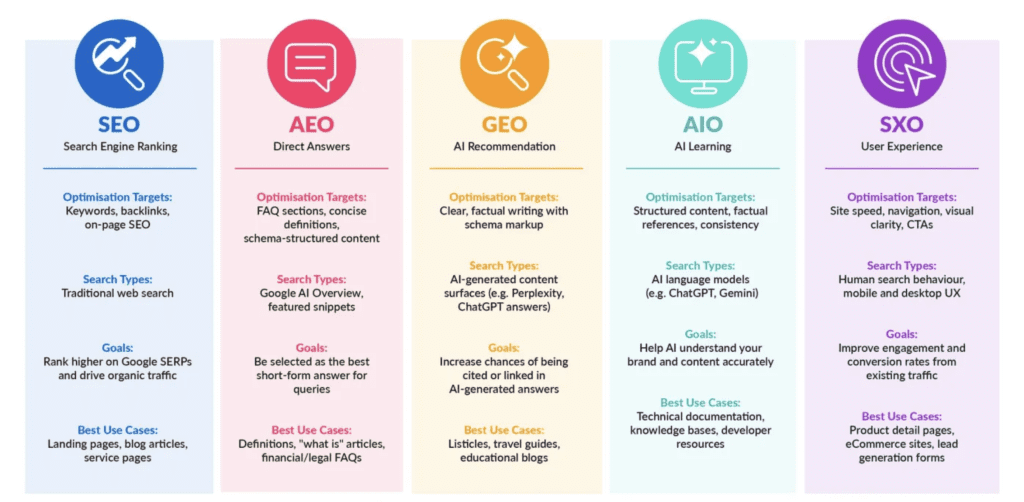
The Technical Evolution: From Traditional SEO to AEO, GEO, and AIO
To navigate this new ecosystem, a digital marketing agency can no longer rely exclusively on link building, keyword density, and optimized meta descriptions. These tactics remain the foundation (SEO isn't dead), but now we need to master additional layers of optimization that speak directly to LLMs. Let's take a closer look at each of these terms.
SEO (Search Engine Optimization): The Necessary Foundation
Classic SEO is something we all already know, and it remains the technical bedrock. Without it, neither Google's bots nor LLMs can access and interpret your site. Loading speed, mobile responsiveness, SSL certificate, an updated XML sitemap, and a clean URL architecture are non-negotiable prerequisites. Think of SEO as the electrical system of a house: no one sees it, but without it, nothing works.
AEO (Answer Engine Optimization): Structure Your Data for the Machine
AEO represents the first layer of evolution. It focuses on structuring your site's data so that LLMs can process it without ambiguity. It's not just about writing well, but about formatting information in a machine-readable way.
Schema Markup and Structured Data: Currently, 31.2% of sites still completely ignore the use of structured data in JSON-LD format [5]. That's like having a physical store with no sign out front. Correctly implementing Schema Markup(using types like FAQPage, HowTo, Article, Organization, Product, LocalBusiness, and BreadcrumbList) can boost AI visibility by up to 40%. Even more striking: adding verifiable statistics and quotes from real experts to your content can boost your AI citation rate by up to 44%[6]. On the other hand, keyword stuffing (excessive use of keywords) results in a -8%penalty in AI visibility [6].
Content Structure for AEO: AI prefers direct, hierarchically organized answers. If your article's H2 is a question (e.g., “What is AEO?”), the paragraph immediately following it should provide a clear, complete answer in no more than 3 sentences. After the direct answer, use lists (bullet points), comparison tables, or code blocks to add detail. Include FAQ sections at the end of every important page, since they're the format LLMs prefer for extracting short answers.
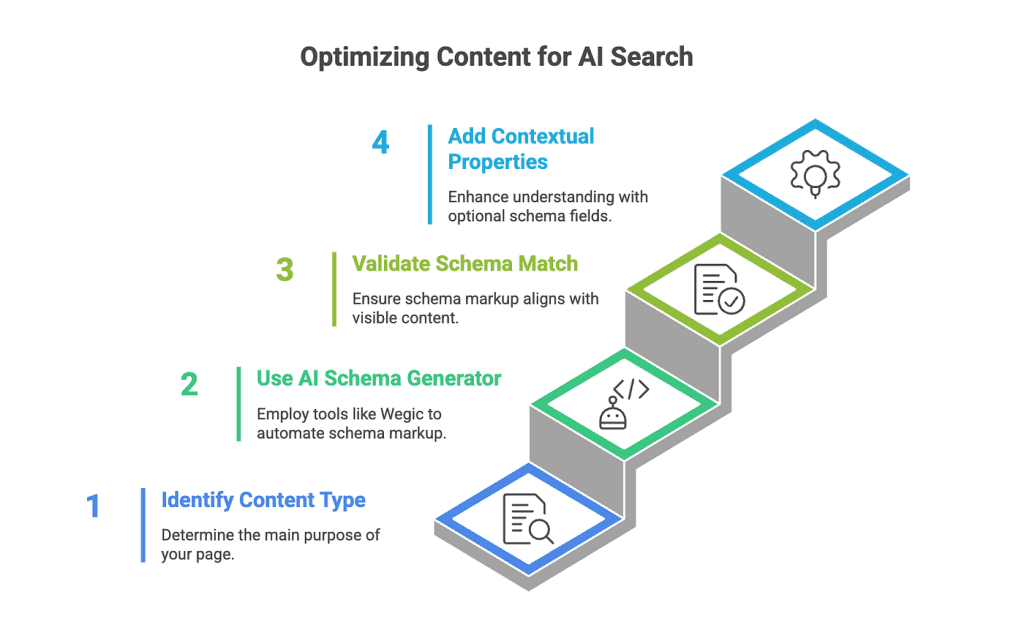
GEO (Generative Engine Optimization): Earning the AI's Trust
While AEO focuses on technical structure, GEO focuses on authority, originality, and consensus. Generative AIs (ChatGPT, Perplexity, Gemini, Claude) need trustworthy sources to base their answers on and avoid hallucinations. The goal of GEO is to make your brand recognized as an authoritative entity worthy of citation.
The Consensus Factor: LLMs don't rely on a single source. They cross-reference your website's data with forums (like Reddit, which has multimillion-dollar data licensing deals with OpenAI [7]), review directories (G2, Capterra, Reclame Aqui), press mentions, and even social media profiles. If there is consensus among these sources about your brand's quality, positioning, and differentiators, the AI assumes the information is reliable and starts citing it. If there's a contradiction (e.g., your site claims you're a leader, but G2 has negative reviews), the AI discounts or downplays it.
Content with Real Authorship: A study presented at SXSW showed that 60% of the results cited by LLMs aren't even in Google's top 20 [8]. This means AI doesn't rely solely on traditional rankings; it looks for depth, original data, and verifiable human authorship. Articles written by real experts, with a bio and credentials, are far more likely to be cited than generic, unattributed content.
The llms.txt Standard: One of the most relevant technical innovations of 2026 is the adoption of the llms.txt file [9]. Similar to robots.txt, which guides Google's crawlers, llms.txt is a Markdown-format file placed at the server root (e.g., yoursite.com/llms.txt) that acts as a direct manifesto for AI agents. In it, you summarize the company's purpose, map out the most important documentation and pages, list your main products/services, and provide structured context free of visual noise (CSS, JavaScript, pop-ups). Implementing llms.txt is like handing a detailed map directly to ChatGPT, making it easier for it to understand and recommend your company correctly.
AIO (Artificial Intelligence Optimization): Multichannel Orchestration
AIO is the strategic layer that ties everything together. It consists of using AI itself as a production and distribution tool, creating a content ecosystem so robust and consistent that LLMs recognize your brand as an authoritative entity across multiple channels simultaneously. An in-depth article (GEO) gets turned into a video script, social media posts, a newsletter, and a podcast, ensuring the brand's message stays consistent across every touchpoint AI consults.
The industry impact: how different markets are reacting to declining traffic
The expansion of AI Overviews isn't uniform. An analysis by Search Engine Journal showed that AI coverage in SERPs grew 58% year over year(February 2025 vs. February 2026), with some industries far more affected than others [10]. This is where an agency's specialization becomes a decisive competitive advantage.
B2B and Technology: The Hardest-Hit Sector
The corporate market was hit hard. Consolidated data reveals that 73% of B2B websites experienced a significant loss of organic traffic between 2024 and 2025, with CTR dropping as much as 30% in enterprise software categories [11]. Commercetools, for example, reported a 20% drop in CTR in just 8 months [12].
To reverse this scenario, a B2B marketing agency needs to stop producing generic content (“What is CRM?”) and focus on Thought Leadership, proprietary case studies, and exclusive benchmarks. AI already answers “what is CRM” perfectly; what it can't manufacture is the real-world experience of implementing a CRM in a specific industry.
Real Estate and Conversational Search
Property searches are becoming hyper-personalized through AI. Today's user no longer types “apartments for sale Barra da Tijuca.” Instead, they converse with AI: “I want a 3-bedroom apartment near good schools, with a gourmet balcony and condo fees up to R$1,500 in the west zone of Rio.”
A marketing agency specializing in real estate needs to ensure that geolocation data, amenities, floor plans, price ranges, and project differentiators are perfectly structured via Schema Markup (RealEstateListing, Place, GeoCoordinates types). Local AEO is key: if the AI can't find your development's structured data, it will simply recommend the competitor that has it.
Physical Retail, Malls, and AI as a Digital Concierge
For physical retail, AI is becoming the new concierge. A marketing agency for shopping malls needs to ensure that opening hours, event calendars, store maps, current promotions, and parking availability are formatted so voice assistants and generative AIs can instantly answer questions like “Which kids' shoe stores are open right now at Shopping X?” or “Does Shopping Y have an IMAX theater? What movies are showing?”
Implementing Schema Markup of type ShoppingCenter, Store, Event, and MovieTheater is essential. Malls that don't structure this data are also literally invisible to this new generation of search.
Education: The Sector with the Fastest Growth in AI Overviews
The education sector recorded the fastest growth in AI Overviews among all the sectors analyzed [10]. Students and parents use AI to compare curricula, tuition fees, MEC (Ministry of Education) ratings, infrastructure, and graduate employability — a direct reflection of the shift in digital consumption in Brazil. Here, a marketing agency specializing in education should focus on full data transparency: publishing comparative course tables, student testimonials with name and photo, and ensuring all institutional information is up to date and structured.
Film, Entertainment, and Audiovisual
The entertainment market is living a duality: while AI threatens organic traffic, it also creates new distribution opportunities. Google Cloud data shows that 54% of media and entertainment executives are already actively using AI agents for media planning, creative production, and analytics [13].
A marketing agency specializing in film / entertainment / audiovisual needs to optimize synopses, credits, casts, reviews, and trailers so that AI can answer questions like “What's the best horror movie showing in Rio right now?” or “Which Brazilian series were nominated for international awards in 2026?” Schema Markup of type Movie, TVSeries, Event, and Review is essential.
What role will digital marketing agencies play in this context in 2026?
Traditional digital marketing, focused exclusively on volume of impressions and clicks, has become insufficient. To survive the decline in traffic and thrive in the era of generative search, companies need partners who understand the engineering behind LLMs, structured data architecture, and the dynamics of digital consensus. This ties directly into the main digital marketing trends for 2026 that we've mapped throughout the year.
It's in this context that the concept of an AI First digital marketing agency emerges. But what does this mean in practice? An AI marketing agency (or simply an AI agency) doesn't use artificial intelligence just to write copy faster or generate images for social media. It uses AI as a tool for data analysis at scale, code structuring for machine readability, monitoring citations in LLMs, and building content ecosystems that generate verifiable consensus across the web.
On Marketing Digital works with clients across Brazil and was one of the first agencies to adopt the AI First model, integrating AEO and GEO techniques into its service stack, and our presence at SXSW 2026 further reinforces this commitment to technological innovation.
Action plan: what to do next Monday
Theory matters, but execution is what really counts. Here's a practical roadmap to start adapting your digital strategy right away:
- Audit your transparency: Are your prices, differentiators, pros and cons published clearly on your site? If not, AI will look for that information elsewhere (G2, Reclame Aqui, Reddit) or, worse, make it up.
- Implement Schema Markup: Start with the types most relevant to your industry (FAQPage, Organization, Product, LocalBusiness, Article). Use Google's Schema Markup Validator to test it.
- Create an llms.txt file: Place a Markdown file at the root of your domain summarizing your company's purpose, core services, and links to the most important pages.
- Produce content with original data: Stop rewriting what's already out there. Create proprietary research, publish industry benchmarks, and credit your content to real, credentialed authors.
- Monitor your AI citations: Regularly ask ChatGPT, Perplexity, and Gemini about your industry and check whether your brand appears in the answers. If it doesn't, you have a GEO problem.
- Focus on conversion: With less traffic coming in, each visitor is worth more. Optimize your site's experience to convert twice as many of the visitors still arriving via organic search and AI Search.
FAQ: the most frequently asked questions about declining traffic and the future of search
What's the difference between SEO, AEO, and GEO? SEO (Search Engine Optimization) optimizes websites to rank in lists of links on traditional search engines. AEO (Answer Engine Optimization) structures a site's data (via Schema Markup and content formatting) so that it becomes the direct answer provided by virtual assistants and generative AI. GEO (Generative Engine Optimization) focuses on building authority and digital consensus so that the brand gets cited as a trusted source by LLMs.
Why is organic traffic declining in 2026? Organic traffic is declining due to the “Zero-Click Economy,” where tools like Google AI Overviews, ChatGPT, and Perplexity answer users' questions directly on the search page, eliminating the need to click on third-party links. Gartner predicts a 25% drop in traditional search volume by the end of 2026.
What is the llms.txt file and how do you implement it? The llms.txt is a Markdown text file placed at the root of a website (e.g., yoursite.com/llms.txt) that serves as a structured guide for AI agents. It summarizes the company's purpose, lists its main services and products, and points to the most important pages on the site. It's considered the “robots.txt of the AI era.”
How can I tell if my brand is being cited by AIs? The most direct way is to ask relevant industry questions on tools like ChatGPT, Perplexity, and Google Gemini and check whether your brand appears in the answers or cited sources. There are also specialized LLM citation monitoring tools, such as Otterly.ai and Profound.
What's the impact of declining traffic on the real estate sector? The real estate sector is heavily impacted because searches are becoming conversational and hyper-personalized via AI. A marketing agency specializing in real estate needs to make sure geolocation data, amenities, floor plans, and price ranges are structured via Schema Markup so AI can recommend properties correctly.
What's the impact on B2B marketing? The B2B sector was among the hardest hit: 73% of B2B sites saw significant traffic loss between 2024 and 2025, with CTR drops of up to 30% in software categories. The recovery strategy relies on thought leadership, proprietary data, and exclusive case studies.
This article was produced by the On Marketing Digital team based on in-depth research and insights gathered in person at SXSW 2026 in Austin, Texas. On Marketing Digital is an AI First digital marketing agency that serves companies across various industries in Brazil, the US, and Europe, and specializes in Branding, Advertising, Social Media, Inbound, SEO, AEO, GEO, and optimization for the era of generative search.
Bibliographic References
[1] Forbes (2026). The Zero-Click Economy: Why 60% Of Searches End Without A Click.
[2] Semrush (2025).Zero-Click Search Study & AI Overviews Impact (10M keywords).
[3] Gartner (2024).Predicts Search Engine Volume Will Drop 25% by 2026.
[4] Semrush (2026).AI Search Conversion Rates vs Traditional Organic.
[5] TNG Shopper (2025).SEO Statistics 2025: GEO, AEO, and Search Optimization Data.
[6] LinkedIn / The Web Guys NZ (2026).How Structured Data and Schema Markup Drive AEO Success.
[7] OpenAI & Reddit Partnership (2024).Multi-year data licensing agreement.
[8] SXSW Talk (2026).AI Killed Your Website Traffic — Now What?.
[9] Search Engine Land (2025).Meet llms.txt, a proposed standard for AI website content crawling.
[10] Search Engine Journal (2026).Google AI Overviews Surges Across 9 Industries.
[11] ABM Agency / GTM8020 (2026).Zero-Click Search Impact on B2B Marketing.
[12] Digiday (2025).B2B and DTC marketers find themselves on the zero-click search frontline.
[13] Google Cloud (2025).Media and entertainment scales AI for real business results.
